Planning a first safari raises a simple question that has no single answer: what is the best time to visit Kenya for Assamese speakers? If you grew up in Assam, you already know how seasons shape daily life. The Brahmaputra swells, Kaziranga closes its gates during the monsoon, and migratory birds arrive when the water recedes. Kenya runs on a similar rhythm. Its dry and wet seasons decide where the wildlife gathers, whether you can reach a park, and what your photos will look like. This guide frames Kenya’s calendar against Assam’s own, so the months feel familiar before you book anything.
What Is the Best Time to Visit Kenya for Assamese Speakers?
The short answer: June to October for the wildebeest migration, or January to February for calving season and lighter crowds. Both fall in Kenya’s dry months, when roads are passable and wildlife gathers around shrinking water sources. The right choice depends on whether you want the migration spectacle or a quieter, more affordable trip with strong game viewing.
How Does Kenya’s Climate Compare to Assam’s Monsoon Season?
Assam’s monsoon usually arrives by June and lingers into September. Kaziranga floods, and the park often closes to visitors. Kenya has not one but two rainy seasons, and they follow a different schedule.
The long rains fall from March to May. The short rains arrive in November and taper off in December. Between them sit two dry seasons: a short one from January to February and a long one from June to October.
Think of Kenya’s long rains as Assam’s monsoon in miniature. Roads turn muddy, some camps close, and the landscape turns lush green. The short rains are lighter and less disruptive, more like a heavy pre-monsoon shower than a flood.
If you want the equivalent of Kaziranga’s post-monsoon reopening, aim for Kenya’s dry season. The grass is low, animals gather around shrinking water sources, and parks are fully open. That is the window most first-time visitors choose.
What Is the Best Month to Visit Kenya for Safari?
No single month wins for everyone, but two windows stand out for first-time safari planners.
January to February is the calving season in the Masai Mara. The short dry season keeps the grass low, and the wildebeest herds give birth in a concentrated burst. Predators follow the newborns, so lion and cheetah sightings are frequent. Crowds are thinner than in peak migration months, and prices sit below the July to October highs.
June to October is the classic dry season. This is the best time to see the Great Wildebeest Migration in the Mara, with the famous river crossings peaking between July and September. The weather is reliable, wildlife viewing is at its strongest, and the parks are at their busiest.
If you want a balance of good game viewing and smaller crowds, February is hard to beat. If you want the migration spectacles you have seen in documentaries, plan for August or September.
When Does the Wildebeest Migration Cross the Mara River?
The migration is a year-round loop, not a single event. The herds follow the rains across the Serengeti in Tanzania and the Masai Mara in Kenya.
The Mara River crossings usually happen between July and October. The herds arrive from the south, gather on the riverbanks, and eventually plunge across. August and September are the most reliable months for crossings, but animals do not follow a timetable. Some years the crossings start in June; other years they drag into November.
If the river crossings are your priority, book well ahead and build flexibility into your schedule. Camps inside the Mara Naboisho and Olare Motorogi conservancies offer quieter access to the same herds, without the crowds at the main reserve crossings.
Is It Better to Visit Kenya in the Dry Season or Rainy Season?
Dry season wins for most safari goals. Here is the honest trade-off.
In the dry season, vegetation thins out and animals concentrate around permanent water. You see more in a shorter game drive. Park roads are passable, and afternoon thunderstorms are rare.
In the rainy season, the parks turn emerald green and the birdlife explodes. Migratory birds arrive from Europe and northern Africa, making November to April the best window for serious birdwatching. Lodge rates drop compared to peak months, often by a wide margin. The catch is that some camps close during the long rains, and game viewing is patchier because animals spread out across the new grass.
If you are coming from Assam and want to avoid anything that resembles a monsoon washout, skip the March to May long rains. The short rains of November and December are a gentler compromise: green landscapes, fewer tourists, and lower prices with only occasional showers.
What Is the Cheapest Time to Visit Kenya?
The cheapest time to visit Kenya is during the low season, which runs through the long rains from March to May. Many lodges offer steep discounts. But this is also when some camps close and airstrips become unreliable, so you trade savings for convenience.
The shoulder months of November and early December offer a better value-for-money balance. The short rains are manageable, the parks are greener than in the dry season, and prices have not yet climbed to the Christmas and New Year peak.
For a clearly labeled sense of cost, budget roughly KSh 25,000 to 40,000 per person per night for a mid-range lodge in the high season, and KSh 12,000 to 20,000 in the low season. These are indicative ranges only; actual prices vary by camp and operator. For a fuller picture, see our breakdown of Kenya safari costs.
What Is the Weather Like in Kenya in December vs July?
December falls in the short rains. Expect warm days around 25 to 28 degrees Celsius, with passing showers, usually in the afternoon or evening. The landscape is green, and the migrant birds are arriving. Crowds build around Christmas, so book early if you travel then.
July is peak dry season. Days are cooler at around 20 to 24 degrees Celsius in the highlands, nights can drop below 15 degrees, and rain is rare. The Mara is at its busiest, and the migration crossings are in full swing.
If you want a quick mental model: December is like Assam’s post-monsoon season, with lingering showers and fresh greenery. July is like a clear winter morning, dry and crisp.
When Is Calving Season in the Masai Mara?
Calving season runs from late January through February. The wildebeest herds are in the southern Mara and the adjacent conservancies, and a large share of the herd gives birth within this short window.
This is the best time to see newborn wildebeest taking their first steps, often within minutes of birth. The predator action is intense, since lions, leopards, and hyenas target the vulnerable calves. The grass is short, visibility is excellent, and the crowds are far lighter than in August.
For most first-time safari planners, January to February is the sweet spot: strong game viewing, comfortable weather, and no need to compete with the peak-season crowds. Our Masai Mara guide covers the best camps for this window in detail.
Which Parks Are Best in Which Season?
Kenya’s parks do not all peak at the same time. Here is a practical month-by-month view.
| Park | Best Months | Why |
|---|---|---|
| Masai Mara | June to October | Wildebeest migration and river crossings |
| Masai Mara (calving) | January to February | Newborns and predator action |
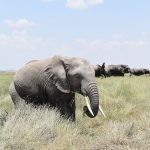
| Amboseli | June to October, January to February | Elephants gather around the shrinking swamps; views of Kilimanjaro are clearest in the dry months |
| Tsavo East and West | June to September | Red elephants and open landscapes; roads are more reliable |
| Samburu | June to September, January to February | Rare species like the reticulated giraffe and Grevy’s zebra are easier to find in dry months |
| Lake Nakuru | Year-round | Rhinos are present year-round; flamingo numbers shift with the lake’s water levels, so sightings are not guaranteed |
If you want to compare the two most popular parks, read our take on Masai Mara vs Amboseli. For the northern parks, the Samburu safari guide gives a fuller picture.
How Many Days Are Needed for a Kenya Safari?
A week is a comfortable minimum for a first safari. That allows three nights in the Masai Mara, two nights in a second park like Amboseli or Lake Nakuru, and a day in Nairobi on either end.
Ten to twelve days gives you room to add a coastal extension in Diani or a night in a conservancy like Ol Pejeta. If your whole trip is only four or five days, focus on one park and use Nairobi as your base.
Flight time from Assam matters too. Guwahati to Nairobi has no direct connection. Most travelers fly from Guwahati to Delhi or Mumbai, then connect to Nairobi. The Mumbai or Delhi to Nairobi leg takes roughly five and a half to six and a half hours on a direct flight. Add the domestic leg from Guwahati and a layover, and the journey takes the better part of a day.
What Visa Do Indian Citizens Need to Visit Kenya?
Indian passport holders need a visa to enter Kenya. The process is straightforward: apply online for an electronic travel authorization, which replaced the old visa on arrival. You will need a valid passport, a return ticket, proof of accommodation, and a fee paid by card. Processing usually takes a few days, so apply at least two weeks before departure.
Do not rely on a visa on arrival. The eTA system is the only official route, and airline staff check it before you board.
How Should Assamese Travelers Time Their Trip Around Indian Holidays?
Your own holiday calendar matters as much as Kenya’s seasons. Durga Puja falls in September or October, which lands right in the peak migration window. Expect higher prices and fuller camps, but pair a long weekend with a week of leave and you get some of the best wildlife viewing of the year.
Bihu in April falls in Kenya’s long rains. Some camps close, and the parks are at their quietest. If your Bihu break is fixed, consider a coastal trip instead of an inland safari, or time your safari for the tail end of the rains in early June.
For a family trip, the December to January school break overlaps with Kenya’s short dry season. The parks are green, the weather is warm, and the Christmas crowds are limited mostly to the coast and the Mara.
Is Kenya Safe for Solo or First-Time Indian Travelers?
Kenya is generally safe for tourists who use common sense. Stick to organized safaris, follow your guide’s instructions, and avoid walking alone in Nairobi after dark. The parks and conservancies are gated, and your camp will handle transfers.
Indian travelers are a growing part of Kenya’s tourism market, and many operators cater to Indian food preferences. Ask your lodge for a vegetarian or Jain menu in advance; most will oblige.
What Makes Kenya Different From Kaziranga?
If you know Kaziranga, you know the thrill of seeing a rhino from an elephant’s back. Kenya offers a different scale. The Masai Mara is open grassland, and the wildlife is spread across a vast horizon. You watch from a vehicle, not an elephant, and the animals are not habituated to human presence in the way they can be in some Indian parks.
The migration is Kenya’s signature event. Few sights in Assam match the scale of the wildebeest herds moving together across the plains. The named conservancies, like Mara Naboisho and Olare Motorogi, offer exclusivity that is rare in most national parks. You share the land with a handful of vehicles, not a convoy.
That difference is worth experiencing for yourself, whether you already know Kaziranga’s forest trails well or this is your first safari anywhere. The conservancies especially reward travelers who want space and quiet over crowded viewpoints.
Where Can You Compare Kenya Safari Operators?
Once you know when you want to travel, compare operators who can handle the logistics. Browse packages on FindMySafari, Valley Safaris, or Trunktrails Safaris to see what fits your dates and budget. Each platform lists vetted operators with transparent pricing, so you can compare safari operators side by side before you commit.